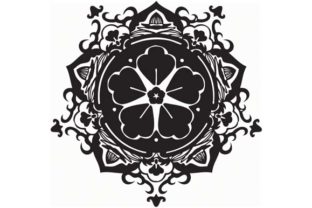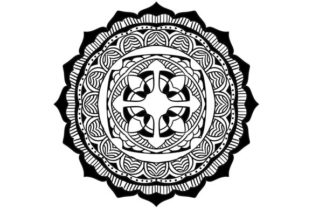
Exploring the Aesthetic and Utility of Mandala Vector Art Pattern Black 39
Mandala vector art has become a powerful visual language in both digital and traditional design realms. Among the many variations available, Mandala Vector Art Pattern Black 39 stands out for its intricate geometry, symbolic depth, and adaptability across diverse creative applications. This article delves into the unique characteristics of this specific pattern, its practical uses, and how it aligns with contemporary design trends and user needs.
The Geometry of Meaning: Understanding Mandala Vector Art
A mandala is more than just an artistic motif; it represents a symbolic map of the universe, often used in spiritual practices and meditation. In the context of vector art, mandalas are transformed into scalable, editable designs that can be customized for various purposes. The term "vector art" refers to graphics created using mathematical equations rather than pixels, allowing for infinite scalability without loss of quality.
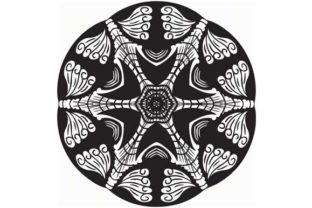
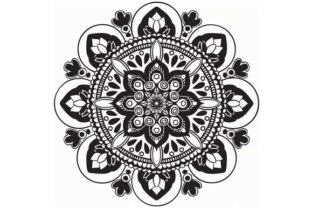
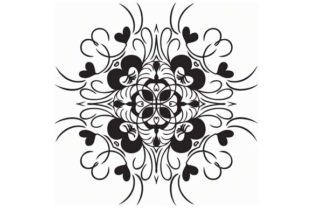
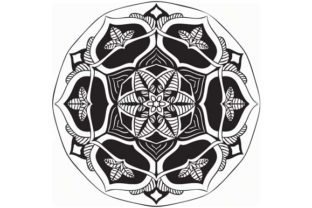
Mandala Vector Art Pattern Black 39 is a specific variant that features a black-and-white color scheme, which enhances contrast and makes it highly versatile for different design contexts. The pattern's structure is built on concentric circles, radial symmetry, and geometric shapes that create a sense of balance and harmony. These elements make it ideal for use in branding, web design, print media, and even educational materials.
One of the key advantages of using vector-based mandalas is their ability to maintain clarity at any size. Unlike raster images, which can pixelate when enlarged, vector patterns remain crisp and clean. This makes them particularly useful for projects that require high-resolution visuals, such as logos, icons, and background textures.
Applications Across Industries: From Design to Education
The adaptability of Mandala Vector Art Pattern Black 39 allows it to be applied in a wide range of industries. Let’s explore some of the most common use cases:
- Graphic Design: Used as a background element or decorative border in posters, brochures, and social media content.
- Web Development: Incorporated into website layouts to enhance visual appeal while maintaining performance efficiency.
- Education: Utilized in teaching geometry, symmetry, and cultural studies, offering a visually engaging way to explain complex concepts.
- Interior Design: Applied as wall art or textile patterns to create a calming and meditative atmosphere.
- Marketing: Integrated into brand identity to convey stability, balance, and a sense of order.
In each of these scenarios, the black-and-white palette of Mandala Vector Art Pattern Black 39 contributes to a minimalist aesthetic that is both modern and timeless. Its geometric precision also supports a strong visual hierarchy, making it suitable for both subtle and bold design applications.
Designing with Precision: Tools and Techniques
Creating or modifying Mandala Vector Art Pattern Black 39 requires the right tools and techniques. Popular software options include Adobe Illustrator, CorelDRAW, and Inkscape, all of which offer robust vector editing capabilities. These programs allow designers to manipulate individual elements of the mandala, such as lines, curves, and colors, to suit specific project requirements.
For those new to vector design, starting with a pre-made template like Mandala Vector Art Pattern Black 39 can be an excellent learning tool. It provides a foundation upon which users can experiment with layering, grouping, and re-coloring. Advanced users may choose to customize the pattern further by adjusting the number of layers, changing the spacing between elements, or incorporating additional design elements.
One important consideration when working with vector mandalas is file optimization. While vector files are generally smaller in size compared to high-resolution raster images, they can still grow large if not managed properly. Designers should ensure that their files are optimized for the intended use, whether it's for print, web, or mobile applications.
Cultural and Symbolic Significance
While Mandala Vector Art Pattern Black 39 is primarily a design asset, it also carries deep cultural and symbolic meaning. Mandalas have been used for centuries in various spiritual traditions, particularly in Buddhism and Hinduism, where they represent the cosmos and serve as aids for meditation and self-discovery.
By incorporating this pattern into modern design, creators can bridge the gap between ancient symbolism and contemporary aesthetics. The black-and-white color scheme, in particular, evokes a sense of simplicity and focus, making it well-suited for environments where mindfulness and clarity are valued.
Moreover, the repetitive and symmetrical nature of mandalas can have a calming effect on viewers, promoting relaxation and mental clarity. This makes the pattern especially appealing for wellness-related projects, such as yoga apps, meditation guides, and therapeutic spaces.
Comparative Analysis: Mandala Vector Art Patterns
While Mandala Vector Art Pattern Black 39 is a standout option, it's worth comparing it with other mandala vector art patterns to understand its unique position in the market. Some patterns may feature vibrant colors, intricate details, or alternative geometric configurations. However, the black-and-white version offers distinct advantages in terms of versatility and adaptability.
For instance, colorful mandalas are often used in children's books or playful branding, whereas black-and-white versions are more commonly found in professional settings. The absence of color allows for greater customization, as designers can easily apply gradients, textures, or overlays to match the desired mood or theme.
Additionally, the simplicity of the black-and-white palette ensures that the pattern remains visually consistent across different mediums. Whether printed on paper or displayed digitally, Mandala Vector Art Pattern Black 39 maintains its integrity and impact, making it a reliable choice for a wide range of applications.
Trends and Future Directions
As digital design continues to evolve, so too does the role of mandala vector art in the creative landscape. Recent trends indicate a growing interest in minimalism, sustainability, and mindfulness—values that align closely with the principles of mandala design.
One emerging trend is the integration of mandalas into interactive experiences, such as augmented reality (AR) and virtual reality (VR). By using Mandala Vector Art Pattern Black 39 as a base, designers can create immersive environments that combine visual beauty with functional utility.
Another area of growth is the use of mandalas in data visualization. Their structured, symmetrical layout can help present complex information in a more digestible format. For example, businesses might use mandala-inspired charts to illustrate financial trends or customer demographics.
Ultimately, the future of mandala vector art lies in its ability to adapt to new technologies and design philosophies while retaining its core essence. Mandala Vector Art Pattern Black 39 exemplifies this adaptability, offering a timeless yet forward-thinking solution for designers and creators alike.